
Mixed Engagement with Strong Nostalgia & AI Push, but Significant User Backlash
- Google's fanpage exhibits a mixed performance.
- While anniversary/nostalgia content and culturally relevant Google Doodles achieve high engagement, general AI product announcements perform moderately.
- A critical issue is significant negative sentiment from users regarding forced AI integration, privacy concerns, and overall product performance, indicating a disconnect between brand strategy and user satisfaction.
- Addressing these concerns through transparent communication and user choice is paramount for maintaining brand trust and loyalty.
01 · Positioning & voiceWhat the Page says, and how it says it
Google as an AI-First, User-Centric Innovator with Legacy Appeal
Google positions itself as an innovative leader deeply integrating AI, particularly the 'Gemini family,' into its ecosystem to provide seamless, practical, and intuitive user experiences. Concurrently, it leverages its brand history and cultural relevance through Google Doodles and anniversary celebrations to foster emotional connections.
This dual positioning aims to appeal to users seeking cutting-edge technology and those who value brand heritage and cultural engagement. However, the strong push for AI is met with user resistance regarding forced integration, complicating the 'user-centric' aspect of the positioning.

Designed for Gemini Intelligence, with personalized, proactive help when and where you need it
Informative and Feature-Focused
A prominent tone is informative, directly communicating new product features, updates, and practical utilities using clear, concise language, often enhanced with structured text and emojis.
This tone effectively conveys product value propositions, making complex information digestible for the audience. It supports Google's role as a technology innovator introducing new solutions.
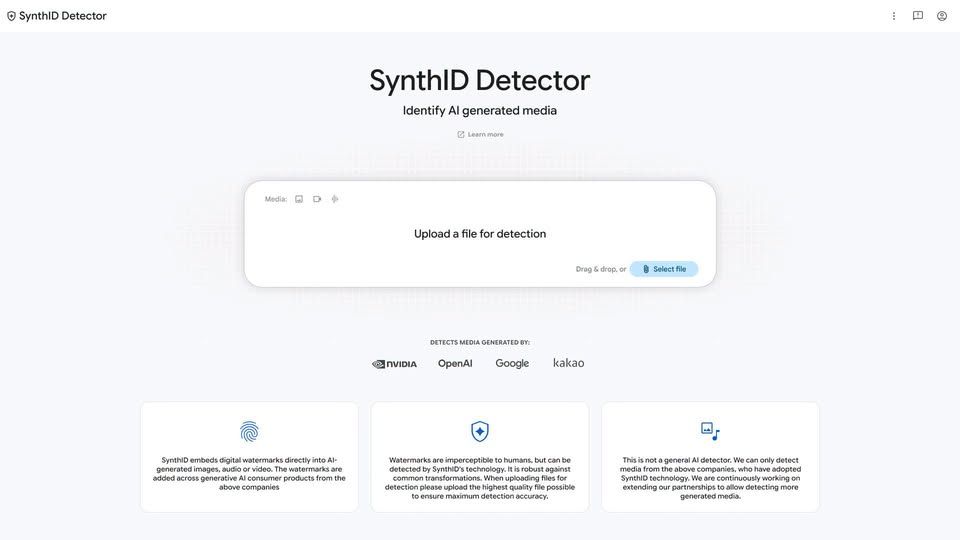
Today we're expanding access to SynthID Detector — our verification portal to identify AI-generated content — to everyone globally in English...
Celebratory and Nostalgic
The brand adopts a warm, celebratory, and nostalgic tone for milestones and cultural events, using emotive language and imagery that evokes positive memories and brand affinity.
This tone fosters emotional connections and brand loyalty, reminding the audience of Google's long-standing presence and positive impact, which is highly effective in driving engagement.
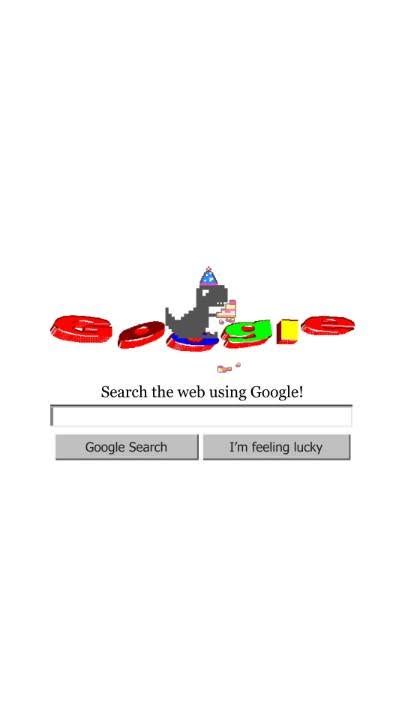
Celebrating 28 years of curiosity, learning, and discovery. Today's #GoogleDoodle celebrates with a beloved throwback logo – even the dino made a guest appearance (and managed to find the cake.) Let’s party! 🎂🦖
02 · Content pillarsThe themes the Page returns to
A significant portion of content focuses on introducing new AI capabilities, particularly within the 'Gemini family,' and its integration across various Google products and platforms, including audio models, desktop applications, workflow automation, and image generation.
Content regularly features Google Doodles honoring cultural events, artists, or holidays, as well as significant brand milestones like anniversaries. These posts often incorporate nostalgic elements.
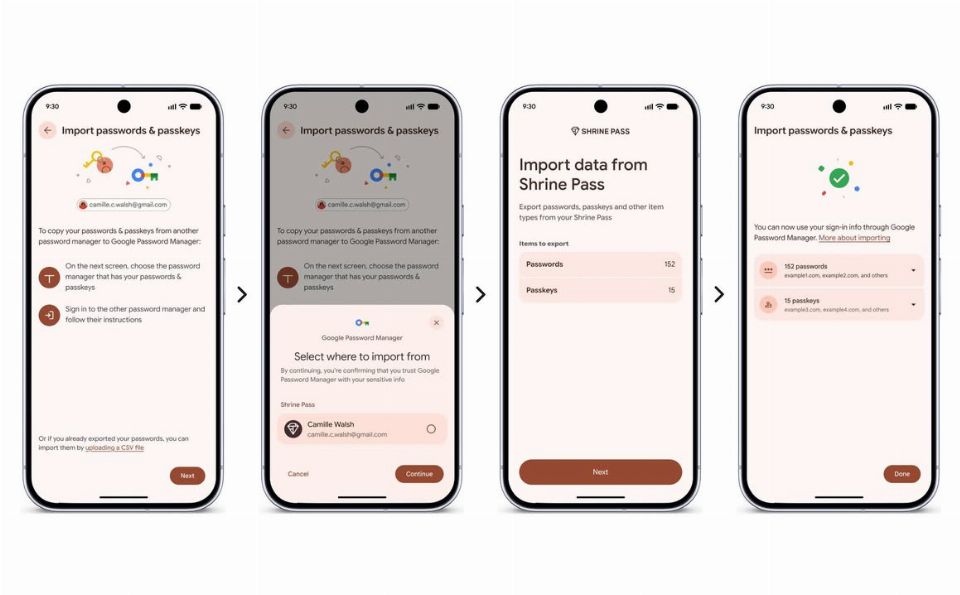
Posts frequently highlight improvements and new features for existing Google services, emphasizing seamless user experience, practical utility, and cross-device compatibility, such as password and passkey transfer on Android.
03 · What worksThe content that drives engagement
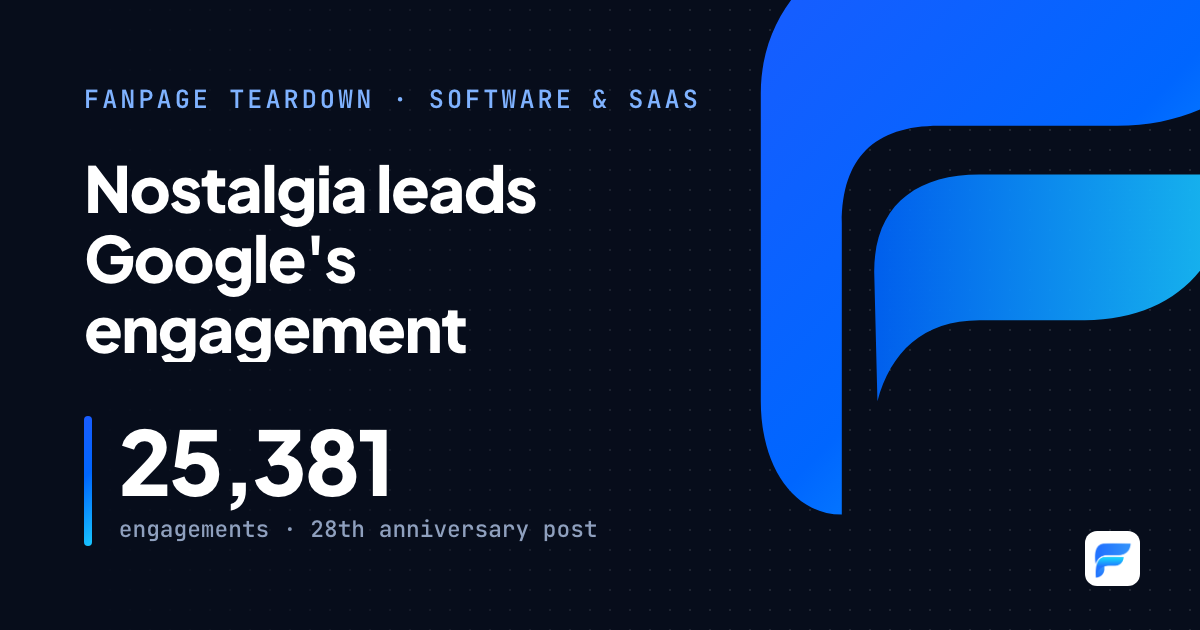
Anniversary/Nostalgia Content Drives Exceptional Engagement
The post celebrating Google's 28th anniversary (post:6565), featuring a throwback logo and the iconic Chrome Dino, garnered significantly higher engagement with 24017 reactions, 549 comments, and 815 shares. This vastly outperforms all other posts in the provided batch.
Content that evokes nostalgia and celebrates brand milestones, particularly by leveraging beloved long-standing elements, is highly effective in generating organic reach and fostering strong emotional connections with the audience. Incorporating such elements in future campaigns can lead to high engagement.
Celebrating 28 years of curiosity, learning, and discovery. Today's #GoogleDoodle celebrates with a beloved throwback logo – even the dino made a guest appearance (and managed to find the cake.) Let’s party! 🎂🦖
Google Doodle Content Generally Performs Well, with Variation
Google Doodle posts show strong engagement. The 'Honoring Native American art' Doodle (post:33813) had the second-highest engagement (5344 reactions, 280 comments, 956 shares). However, the 'Halloween Doodle' (post:33814) generated lower engagement (1691 reactions, 152 comments, 317 shares) compared to other Doodles and AI-focused posts.
Google Doodles are a reliable way to engage the audience, indicating a positive reception for culturally relevant and celebratory content. However, the specific theme or execution can significantly impact performance, suggesting that broadly appealing and well-received themes lead to better results.

Honoring Native American art with today’s #GoogleDoodle and Smithsonian’s National Museum of the American Indian ✨
Effective Use of Emojis and Structured Text for Feature Communication
Posts introducing new products or features, such as Googlebook (post:4877), Gemini audio models (post:4881), and Android password transfer (post:4883), consistently use emojis and structured formatting (e.g., bullet points, numbered lists) to highlight key benefits and features.
This approach enhances readability and allows for quick comprehension of complex information, which is crucial for engagement on social media. This style likely improves the audience's ability to grasp value propositions efficiently.
💪 Crafted with 2.8K OLED touchscreen displays, 14 hour battery life and all the performance needed to power your ideas
Get a teardown like this for your own Page
Paste any Page URL, even a competitor's. No admin access needed, report in minutes.
04 · What does not workContent that fails to land
Strong Negative Sentiment Towards Forced AI/Gemini Integration
Multiple comments express significant dissatisfaction and frustration regarding the mandatory integration of AI (specifically Gemini) into Google's services, and the perceived removal or degradation of previous features like Google Assistant. Users demand choice and the ability to disable AI features.
Despite Google's strong push for AI, a segment of the audience perceives forced AI integration as a negative, leading to user alienation and potential churn. This indicates a need for clearer communication on user choice and addressing specific concerns about AI's impact on existing workflows and beloved features.
Concerns Over Privacy, Data Tracking, and Brand Ethics ('Don't Be Evil')
Users voice explicit concerns about data tracking, privacy violations, and a perceived shift away from Google's historical 'Don't Be Evil' philosophy. Comments indicate distrust and criticism regarding Google's handling of user information and its impact on user freedom.
Eroding trust related to privacy and ethics can severely damage brand loyalty and reputation. Marketing messages need to actively address privacy concerns and clearly demonstrate a commitment to user data protection and ethical practices to rebuild or maintain trust.
General Dissatisfaction with Product Performance and Usability
Beyond AI-specific issues, some users express general frustration with the quality and usability of various Google products, citing problems with phone/app performance, search engine effectiveness, mail client cumbersomeness, and Chrome's resource consumption.
While not as prevalent as AI or privacy concerns, these broader product dissatisfaction points highlight underlying user experience issues. Addressing these fundamental usability and performance problems across the product suite is crucial for overall customer satisfaction and brand perception.
Reels Underperform Photos in Median Engagement
While Reels are the most frequently posted content type (34 posts), their median engagement (862) is significantly lower than that of photos (1830 median engagement from 17 posts).
Despite a high volume of Reels, their engagement efficiency is suboptimal compared to photo content. This suggests that the current Reel strategy may not be fully optimized to capture audience interest, potentially due to content quality, relevance, or format. There's an opportunity to re-evaluate Reel content and production.
Strengths 3
05 · AudienceWho engages with the Page
Strong Emotional Connection to Brand History and Nostalgia
Users demonstrate a significant emotional connection to Google's past, as evidenced by heartfelt comments and sharing of personal memories on anniversary and nostalgia-themed posts, particularly those featuring iconic elements like the Chrome Dino.
The audience values and connects deeply with Google's heritage. Leveraging nostalgia can effectively drive high engagement and foster brand loyalty by tapping into positive shared experiences.
Significant User Backlash Against Forced AI Integration
A notable segment of the audience expresses strong negative sentiment, frustration, and demands for choice regarding the mandatory integration of AI (Gemini) and the perceived replacement/degradation of existing features like Google Assistant.
There is a clear disconnect between Google's AI-first strategy and a significant portion of its user base who feel their autonomy is being undermined. This sentiment can lead to brand alienation if not addressed, indicating a need for more transparent communication and user control.
Deep Concerns Regarding Privacy and Brand Ethics
Users frequently vocalize concerns about data tracking, privacy violations, and a perceived departure from Google's 'Don't Be Evil' philosophy, indicating a fundamental erosion of trust regarding data handling and ethical practices.
These pervasive privacy and ethical concerns directly impact brand reputation and user loyalty. Proactive and transparent communication efforts are essential to rebuild trust and address these core anxieties within the audience.
06 · OpportunitiesWhat is worth testing next
Humanize AI by Emphasizing User Control and Practical Benefits
While AI content generates moderate engagement, there's significant negative sentiment regarding forced integration and loss of control. The opportunity lies in shifting AI messaging to highlight user choice, customization, and how AI solves specific, everyday problems with clear, tangible benefits.
By focusing on user empowerment and practical utility, Google can mitigate backlash, increase positive reception for AI products, and bridge the gap between technological innovation and user satisfaction. This could involve tutorials on 'how to customize AI settings' or 'AI features that save you X minutes a day.'
Proactively Address Privacy Concerns and Reaffirm Ethical Stance
Audience comments reveal deep-seated distrust regarding privacy and a perceived abandonment of the 'Don't Be Evil' philosophy. This presents a critical opportunity to proactively engage with these concerns.
Google can publish transparent content (e.g., explainers, FAQs, short videos) detailing its data privacy policies, security measures, and renewed commitment to ethical AI. Reaffirming core values could help rebuild user trust and enhance brand reputation.
Optimize Reel Content for Higher Engagement
Reels are the most frequent content type but have a significantly lower median engagement compared to photos, indicating an opportunity to improve their effectiveness.
By analyzing successful Reel formats (like the anniversary post, post:6565) and incorporating elements that drive higher engagement (e.g., strong storytelling, clearer value propositions, interactive elements), Google can improve the overall performance of its most common content format. This could lead to better reach and more efficient content delivery.
Celebrating 28 years of curiosity, learning, and discovery. Today's #GoogleDoodle celebrates with a beloved throwback logo – even the dino made a guest appearance (and managed to find the cake.) Let’s party! 🎂🦖
07 · Action planIf we ran this Page
Develop a 'User Control & Choice' Content Series for AI Features
Directly addresses strong negative sentiment about forced AI integration and user autonomy, potentially mitigating backlash and rebuilding trust by demonstrating Google is listening.
- Goal
- Increase positive sentiment on AI-related posts and demonstrate responsiveness to user feedback.
- KPI
- Reduction in negative comments related to forced AI/privacy by 15%; increase in positive/neutral sentiment on AI posts by 10%.
- Success when
- Achieve >10% reduction in negative AI comments and >5% increase in positive/neutral AI comments over the next two months.
Launch 'Trust & Transparency' Campaign Reaffirming Ethical Commitments
Directly counters widespread distrust and concerns about Google's brand ethics and data handling. Proactive communication can help rebuild loyalty and perception.
- Goal
- Rebuild user trust and reaffirm Google's commitment to user data protection and ethical practices.
- KPI
- Increase positive mentions of Google's ethics/privacy in comments by 20%; decrease negative mentions by 20%.
- Success when
- Achieve >15% increase in positive mentions and >15% decrease in negative mentions regarding ethics/privacy over the next three months.
Optimize Reel Content Strategy Based on High-Performing Examples
Reels are the most frequent post type but have a lower median engagement than photos. Optimizing them can significantly boost overall engagement efficiency for Google's primary content format.
- Goal
- Improve the median engagement rate of Reels and increase their effectiveness in communicating product value.
- KPI
- Increase median Reel engagement by 15% over the next two months.
- Success when
- Median Reel engagement increases by at least 10% compared to the previous period.
Integrate Interactive Elements into Celebratory Posts (Doodles, Anniversaries)
Leverages the high engagement from celebratory/nostalgia content to deepen community interaction, gather user insights, and foster stronger brand affinity.
- Goal
- Increase comment volume and user participation on Google Doodle and anniversary posts.
- KPI
- Achieve a 25% increase in comments on celebratory posts.
- Success when
- Observe >20% increase in comment volume on at least three subsequent celebratory posts.
Suggested experiment (A/B test)
HypothesisProactively addressing user concerns about AI control will improve sentiment on AI-related posts.
Suggested experiment (A/B test)
HypothesisContent emphasizing practical, everyday utility of AI (rather than technical innovation) will resonate better with a broad audience and lead to higher shares.
08 · LimitationsWhat this data cannot tell us yet
Data limitations
- Limited Audience Demographic Data: Most audience demographic fields (gender, age, city) are listed as 'unknown,' preventing detailed targeting or segmentation analysis.
- Sentiment Specificity: While strong negative sentiment is observed, pinpointing the exact triggers for ALL general dissatisfaction comments (beyond AI/privacy) requires deeper qualitative analysis not fully supported by aggregated data.
- Analysis Scope: The 'quick' analysis mode implies a limited depth or duration of data collection, which might not capture long-term trends or seasonal variations.
- No Competitive Benchmarks: Without data from competitor pages, it is impossible to compare Google's performance against industry standards or assess relative strengths/weaknesses.
- Partial Content Analysis: While 54 posts were available, only 12 posts' content was read and analyzed in detail. This means that insights related to content pillars, tone of voice, and content strategy are based on a subset of the total activity, potentially missing nuances.
- Lack of Reach/Impressions Data: The provided data lacks metrics such as post reach and impressions, which are crucial for understanding the true visibility and audience penetration of content.
Data still needed
- Detailed demographic data for engaged users (beyond 'unknown' categories).
- Performance metrics including post reach, impressions, and click-through rates.
- Qualitative survey data from users regarding AI preferences, privacy concerns, and overall product satisfaction.
- Competitive fanpage performance benchmarks to contextualize Google's engagement rates.
- Longer historical data (e.g., 6-12 months) to identify consistent trends and seasonality in performance and sentiment.
- Full content analysis for all available posts to gain a comprehensive understanding of content themes and strategies.
- Data on user actions beyond engagement (e.g., website visits, app downloads) linked to social posts.
Methodology & data sources
This article is edited from an AI report that Fanpage Insight generated on Nov 4, 2026 from public data on the Google Facebook Page. Figures are kept exactly as reported; each finding is labeled as an Observation (drawn directly from the data) or a Hypothesis (needs further testing), with a confidence level. This is independent analysis with no commercial affiliation to the brand mentioned. Images are thumbnails of the original posts, used for citation.
- Posts analyzed
- 12 posts
- Content read
- 12 posts read in full
- Comments read
- 481
- Engagement metric
- Reactions + comments + shares, recorded at collection time
- Report date
- Nov 4, 2026
- Finding labels
- Observation: drawn directly from the data. Hypothesis: an inference that needs testing
- Report ID
- d983e37f